Why Physical Art Is Coming Back in a Digital World
Vinyl just passed a billion dollars again. Online art sales just hit a six-year low. People want the thing in the room.
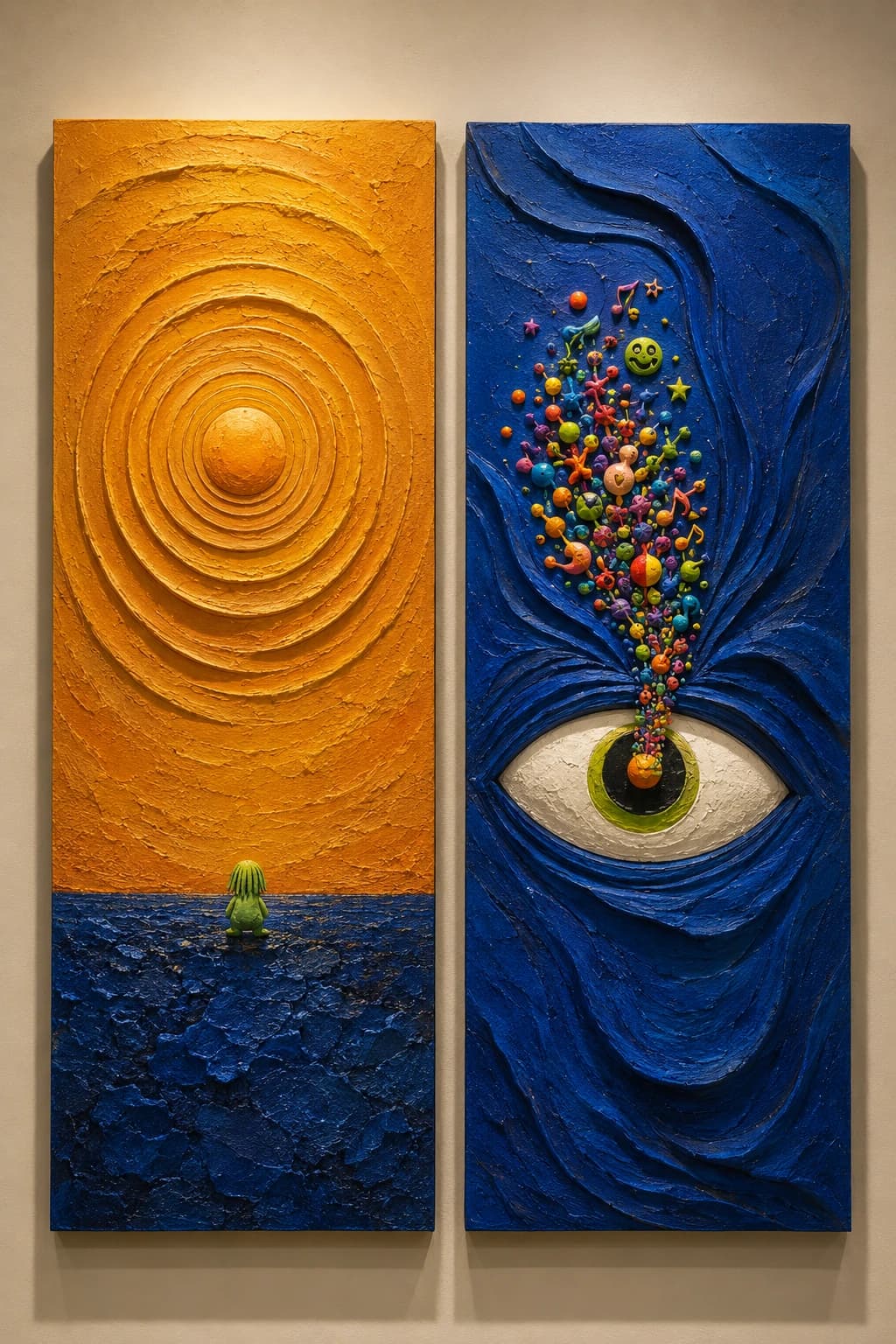 Dual Set 02, painted by Amanda Andress
In 2025, Americans spent more on vinyl records than in any year since 1983. In the same year, the global art market's online sales fell to their lowest level since 2019. Two different industries, one direction: people are paying to have the thing physically in front of them.
The record that wouldn't die
The Recording Industry Association of America's 2025 year-end report, as covered by Music Week, put US vinyl sales past $1 billion for the first time since 1983, up 9.3 per cent on the year. It was vinyl's 19th consecutive year of growth. Buyers took home 46.8 million records, against 29.5 million CDs, and vinyl earned more than three times what CDs did.
Everything about that is strange on paper. The same music is available instantly on every phone. Streaming made up about $9.5 billion of the $11.5 billion in recorded music revenue in the US last year. Nobody needs a record. People buy them anyway, and in rising numbers, which tells you the record is doing a job streaming can't.
The art market, back in person
The Art Basel and UBS Art Market Report is the closest thing the art world has to an annual census. Its 2026 edition estimates global sales rose 4 per cent to US$59.6 billion in 2025 across about 41.5 million transactions, after two years of decline.
The detail that matters here is where the buying happened. Online sales declined to US$9.2 billion, their lowest level since 2019. The report describes a shift away from online-only sales back toward people buying in person.
And new buyers kept arriving. Just under half (49 per cent) of the buyers dealers sold to in 2025 were new to that dealer's business, up from 44 per cent the year before. For smaller dealers it was 60 per cent. Dealers with turnover under US$500,000 saw double-digit sales increases.
The growth was uneven across prices. The same report found sales below US$50,000 fell 2 per cent in both value and volume. But the shape is clear: small galleries finding new people, in person.
What the object is actually for
Talk to anyone who buys records and you hear the same few reasons, and none of them are about sound quality. The object is proof you cared about something before it was everywhere. It sits on a shelf where visitors can see it. It's a ritual: you take it out, you put it on, you can't skip.
An original painting does all of that more intensely. It exists once. It changes with the light across a day. It carries marks you can only see close up: the thickness of paint, a correction, the weave of the canvas.
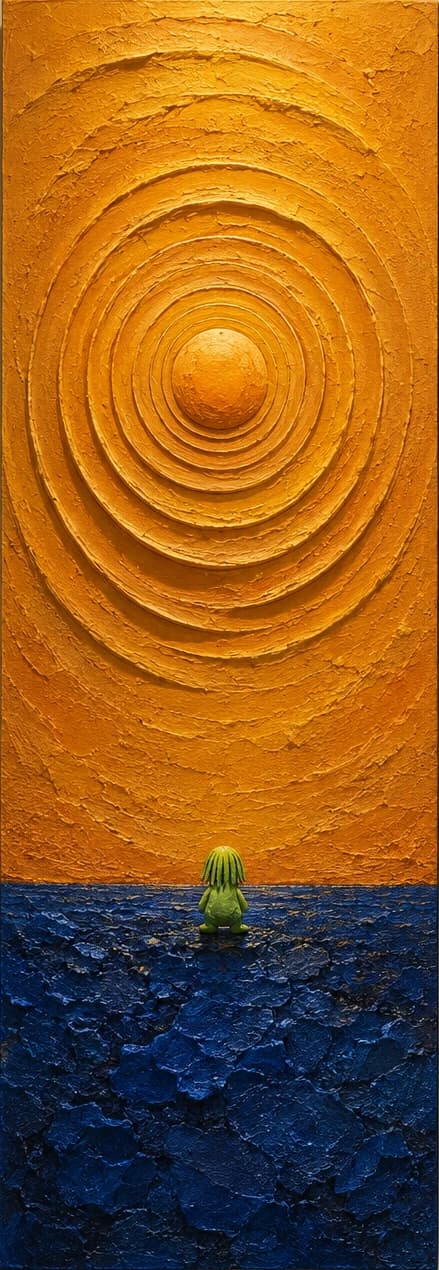
That last point is why this site sells originals at all. Amanda Andress hand-painted the Spacedread collection from characters that started as digital drawings, and the paintings are deliberately full of things a file can't carry: carved rings that catch light, sculpted pieces set into the surface, nails that hold a tear open. The digital version of each one exists. The physical version is the one people ask about.
If you make things
The data points one way for independent makers: the thing that can't be copied is the thing people are paying more attention to. A record, a print, a painting, a zine, a shirt from a run of fifty. The margin has moved from the file to the object, and to the reason someone wants that object in their room.
Spacedread ArtEight original works, four pairs, hanging in a gallery you can walk through.Sources
- RIAA: US revenue hits record high as vinyl sales pass $1 billionMusic Week · checked SEPT 18, 2026
- 2025 Year-End Music Industry Revenue ReportRIAA · checked SEPT 18, 2026
- The Art Basel and UBS Global Art Market Report 2026Art Basel · checked SEPT 18, 2026