The Math Behind a Toronto Night Out Nobody Shows You
A grassroots venue's margin can be about half a per cent. Here is why your favourite small night keeps disappearing, and what changed in the rules this year.
In October 2025 the Velvet Underground on Queen Street West, a 350-capacity room, closed for good. It joined a list that already included the Dakota Tavern. If you have wondered why the small nights you liked keep vanishing, the answer is mostly arithmetic, and the arithmetic is brutal.
Half a per cent
When CTV News looked at the wave of small-venue closures across Canada last fall, Jonathan Bunce of Wavelength Music pointed to research from the U.K.'s Music Venue Trust: the average profit margin for a grassroots music venue is about 0.5 per cent.
The profit margins are really small.
At half a per cent, a room that takes in $100,000 keeps about five hundred dollars. One bad month, one insurance renewal, one broken compressor, and the year is gone. The same reporting listed what's pushing costs up: insurance, labour and artist fees, the last because artists are earning less on tour and asking venues for more.
That's the paradox. Live music is a ten-billion-dollar industry in this country, spread across more than 3,750 venues, festivals and related spaces. Almost none of that money pools in the small rooms where artists learn to play in front of people.
What the city changed
Toronto has at least noticed. In December 2023 City Council approved changes to its licensing and zoning bylaws that took effect on January 1, 2025. Two matter most for anyone running a night:
- Nightclubs, previously restricted to downtown, can now open in commercial zones across the city, subject to conditions.
- Bars and restaurants can use up to 25 per cent of their interior for entertainment, up from 6 per cent. That's room for live music, dancing, games, a DJ who isn't wedged beside the bathroom.
The second change is quietly huge. A restaurant that could only give six per cent of its floor to a performer was never going to become a music room. At a quarter of the floor, a neighbourhood spot can host a real night without becoming a nightclub, which means more rooms, in more parts of the city, that don't need to survive on half a per cent.
Where the ticket money goes
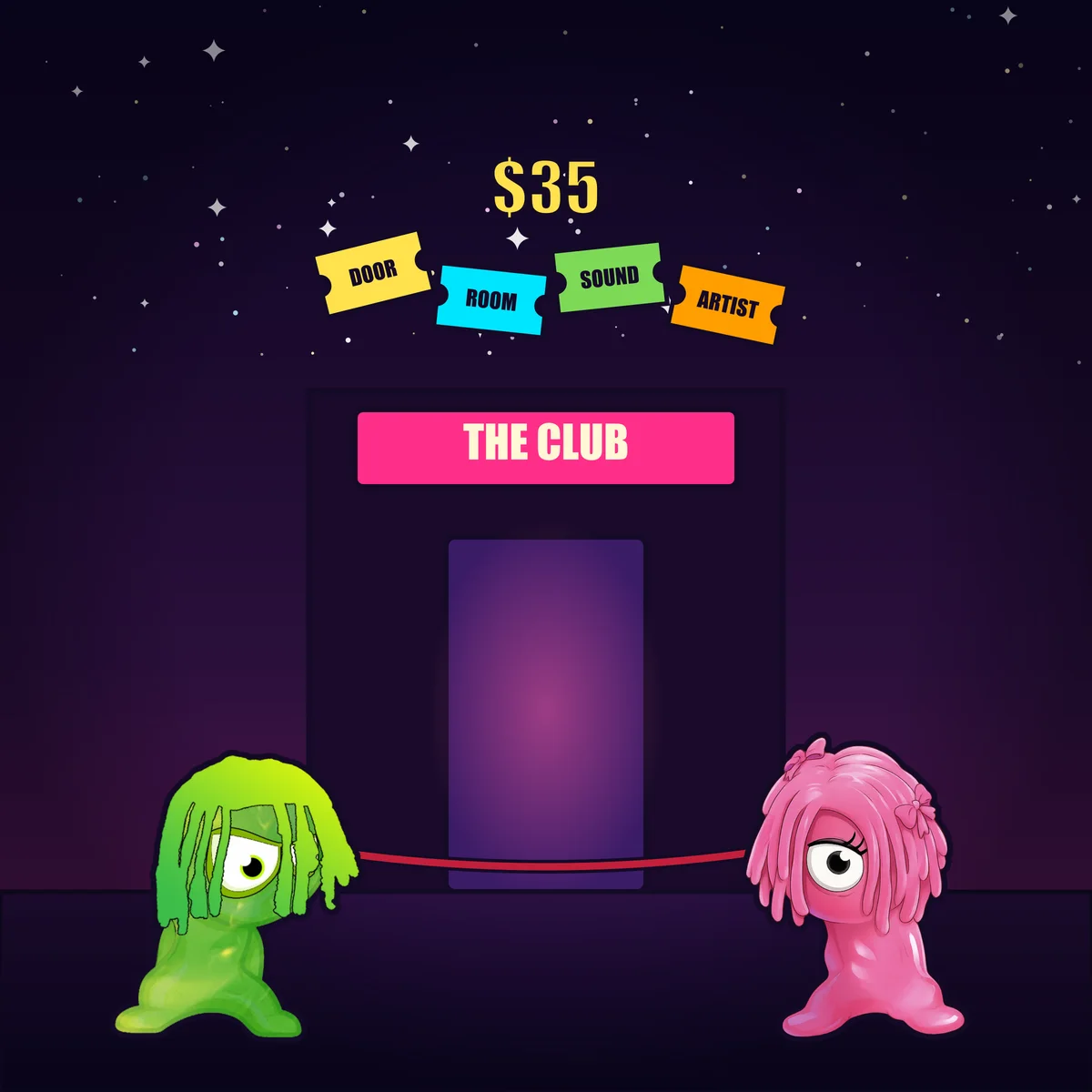
We'll use our own event as the worked example, because publishing somebody else's settlement sheet would be easy and publishing ours is the honest version. The Mango Mixer sold tickets at $35 online and $50 at the door. Here's where a ticket goes at an independent night like it, in the order the money leaves:
- Payment processing. Card fees come off the top of every online ticket before anyone else is paid.
- The room. A venue either charges rent, takes a share of the door, or asks for a bar minimum: a guarantee that the crowd will spend a certain amount at the bar, which the organizer covers if they don't.
- Sound and staff. A sound tech, door staff, and security where the room or the licence requires it.
- The artists. DJs, performers and hosts, who are increasingly (and fairly) asking for more.
- Everything that makes it a night. Visuals, printing, decor, the screen for the films.
- What's left. Often nothing. Sometimes a loss the organizer carries into the next event.
What keeps a night alive
The independent nights that survive in Toronto share some habits. They sell early, so they know their numbers before they commit to costs. They're run by people who also perform, which cuts one line of the budget and adds a reason for people to show up. Raechell Tamaryn books the venue, pulls the lineup together and then sings at her own shows, from The Butterfly Gala at Black Sheep in 2024 to Golden! at the Black Swan Tavern in 2026. Papi AQ built TRPKL into an event series and a platform of its own.
And they treat the audience as the business model. A room of people who come every time is worth more than any single sold-out night, because it lets a promoter plan instead of gamble.
Which is the part a reader can actually do something about. Buy the ticket early. Go to the small room. Spend at the bar. A half-a-per-cent business survives on exactly those three things.
Spacedread ExperiencesThe nights we run, and how to bring one to your room.Sources
- Why are a growing number of small music venues closing in Canada?CTV News / CP24 · checked SEPT 18, 2026
- City's Night Economy to get a boost as Toronto City Council approves new ways to generate growthCity of Toronto · checked SEPT 18, 2026
- Night EconomyCity of Toronto · checked SEPT 18, 2026
- Canadian Live Music Association releases the first-ever economic impact assessment of live music in CanadaBillboard Canada · checked SEPT 18, 2026
- Mango Mixer ticket pricesSpacedread · checked SEPT 18, 2026